

Since 1996, the Roanoke Valley Preservation Foundation has annually announced a list of significant historic, natural, and cultural sites in the Roanoke Valley that are in eminent danger of being lost due to deferred maintenance, demolition, or incompatible development. The intent is not to shame or punish the current owners but to bring attention to these sites and encourage their preservation and stewardship. The goal is to work closely with property owners and local governments in exploring options to promote their preservation.
As the month of May is designated as Preservation Month, each year in May, Preservation Virginia and the Roanoke Valley Preservation Foundation announces their Annual Endangered Sites List to call attention to local history, special places, and the possibility that these significant sites are in danger of being lost unless efforts are made to preserve them.
The Roanoke Valley Preservation Foundation’s intent is not to shame or punish the current owners but to bring attention to these sites and encourage their preservation and stewardship. The goal is to work closely with property owners and local governments in exploring options to promote their preservation.
 The Roanoke Valley Preservation Foundation Announces the 2026 Endangered Sites List.

Since 1996, the RVPF has announced a list each year of significant historic, natural, and cultural sites in the Roanoke Valley that are in danger of being lost due to neglect, deferred maintenance, demolition, or incompatible development. The Foundation’s goal is to raise awareness of the significance of these sites and to help identify options to promote their stewardship. The RVPF hopes to serve as a resource to property owners by making them aware of the significance of their property as well as possible tools available to support the preservation of these sites.
This year, the RVPF identified four unique historic resources that are endangered that include an antebellum brick house, a post-Civil War stone railroad bridge that is individually listed on the National Register, a 1920 golf course with connections to one of Roanoke’s earliest settlers, and a disappearing historic community. The 2026 sites include the following:
-
1850 BUTTS HOUSE, ROANOKE COLLEGE, (Salem, VA)
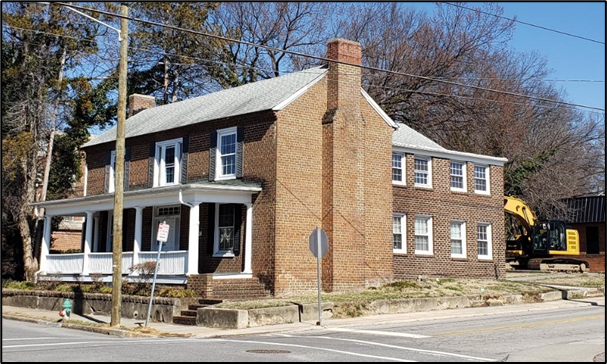
The Butts House at 102 N. Market Street in Salem is a rare surviving example of the mid-19th century work of J.C. Deyerle. A member of the well-known Deyerle family, master builders, and owners of a brick manufacturing plant in Salem, J.C. Deyerle built many of the earliest and most prominent buildings of Roanoke College, Salem, and Roanoke County. Built with either enslaved or recently freed labor, the house is also part of the material culture that Roanoke College has recognized through their leadership in the University’s Studying Slavery project.
The RVPF previously recognized the college’s stewardship of history with Kegley Preservation Awards for the “Histories of Enslavement at Roanoke College” walking tour brochure in 2022 and the Genealogy of Slavery Database and the Authors and Architecture Sculpture in 2025. Although the house is proposed for demolition, we encourage the College to explore other options and continue its leadership in preserving our shared history.
-
1873 VALLEY RAILROAD BRIDGE (Salem, VA)
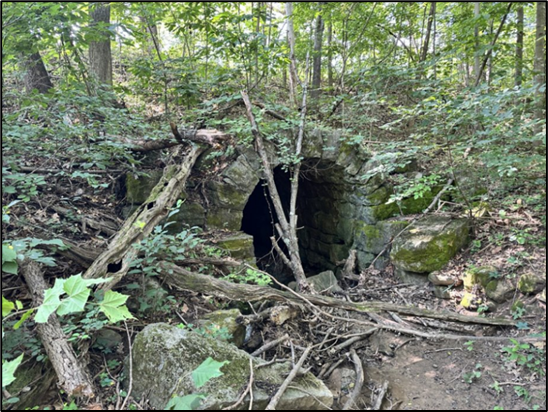 The 1873 Valley Railroad Bridge in Salem, Virginia, is an architecturally significant remnant of an unrealized transportation scheme from the Period of Reconstruction following the Civil War. The Valley Railroad was never completed to Salem; thus, the bridge was never used. Built at considerable expense, the bridge comprises solid engineering with some of the very best stonework ever found in the area. The bridge is a barrel vaulted tunnel through which flows a drainage known as Gish Branch, with the railroad grade crossing over the top. The stone was sourced from local quarries, and Irish immigrants along with formerly enslaved African Americans constructed the bridge. Though there are many other surviving stone structures from the Valley Railroad, the bridge over Gish Branch is by far the most impressive example in the area.
The 1873 Valley Railroad Bridge began to lack maintenance after being listed on the National Register in 2008 and is threatened by neglect with debris and heavy vegetation overtaking the structure. A protective Conservation Easement has been recommended, and a potential walking trail along the Gish Branch could connect with Mason Creek Greenway and the Hanging Rock Battlefield trail. Historic signage is also recommended to make the public more aware of the significance of the bridge.
-
OLE MONTEREY GOLF CLUB, WILLIAM FLEMING GRAVESITE, 1827-28 THOMAS GOODE HOUSE (Roanoke, VA}
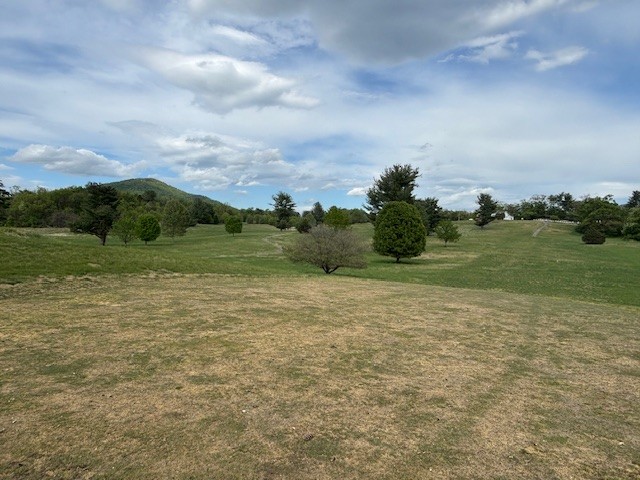
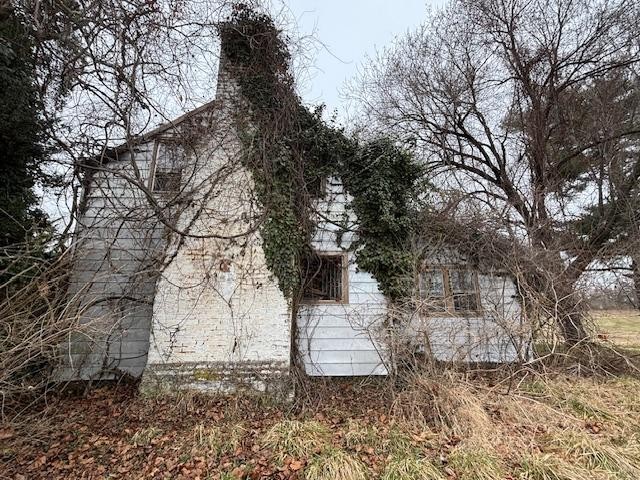 The 1920 Ole Monterey Golf Club, designed by William Flynn, is the second oldest golf course in the Roanoke Valley and widely praised for its commanding views of the valley. But its recent closure for “maintenance and renovations” has neighborhood groups concerned that after years of minimal upkeep that it may be sold for development. The course occupies land formerly owned by Revolutionary era patriot Colonel William Fleming; he and his wife Nancy are buried on the property and this family cemetery which irrefutably establishes the association of the land to Fleming may also be threatened. A clapboard-sided log house, dated to 1827–28 and now in near-ruinous condition, Bellmont, is a good example of an early dogtrot log building. The house also features the region’s only known decoratively painted log fireplace lintel. Built after Fleming’s death in 1795, it is also known as the Thomas Goode House, since he was the owner of the property when it was constructed in 1827-1828.
The golf course, which lies next to the Great Valley Road north of Tinker Creek in NE Roanoke, is adjacent to the historic 1845 Greek Revival home Monterey. The house and 116 acres of pasture are protected by a historic and conservation easement, the only protected farmland in the Roanoke City limits. If the golf course is sold, it is hoped that it will remain compatible with the historic and open nature of the area that residents have enjoyed for decades.
-
“OLD CAVE SPRINGS VILLAGE” (Roanoke County, VA)
 The village of Cave Springs was a thriving crossroads community from the mid-19th to the mid-20th century in what would become an affluent suburban neighborhood in southwest Roanoke County. Located where three early transportation routes met, Cave Springs began as a stopping place for travelers drawn to its many springs, first Native Americans and later farmers, tradesmen, and their horses alike riding from Bent Mountain to Big Lick (later Roanoke City). While there were other springs in the area, “the Cave Spring” was the most prominent and served as the nucleus for the crossroad community that bore its name. By 1885, Cave Springs boasted three stores, three grist mills, two saw mills, and several churches as well as established family residences.
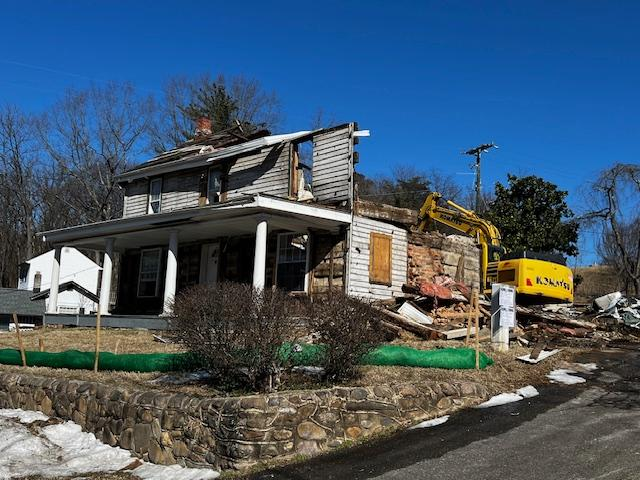
Known for its apples and peaches, this once-agrarian community lost much of its rural character between 1960 and 1980 after farming declined and the cities of Roanoke and Salem expanded. In addition to the 2025 demolition of the Poage family farmstead further west on Rte. 221, three historic buildings in the current Cave Spring (singular name) area were recently demolished, the ca. 1810 Dr. Harding House; a hewn-log house (ca. 1820-1850) on Old Cave Spring Road; and an adjacent ca. 1930 building. Determined to be eligible for listing to the National Register of Historic Places, the demolition of the Dr. Harding House at 3801 Penn Forest Blvd., exemplifies the overall destruction of the fading historic character of “Old Cave Springs.”
Today, only the Cave Spring and its associated ca. 1940s vertical-log house, the 1862 Dr. Gale House, Mulberry Hill (ca. 1880), the former Cave Spring Methodist Church (1854) and a possible historic Dunkard church (now Bethel AME Church) remain. The entire area, particularly Old Cave Spring Road itself, continues to experience increasing traffic and pressure for expansion, especially with the opening of a new Publix at Old Cave Spring Road and Route 221. With few historic resources remaining and many residents of the area not even aware of its history, the RVPF supports efforts to raise awareness through oral histories and interpretive signage.
In summary: This announcement by the Roanoke Valley Preservation Foundation of the 2026 Endangered Sites list as well as the continued threats to previously listed sites are intended to emphasize the importance of educating the public and property owners about the significance of historic resources in the Roanoke Valley.
Roanoke Valley Preservation Foundation Seeking 2027 Endangered Site Nominations
If you know of a significant historical, natural, and/or cultural sites in the Roanoke Valley that may be in eminent danger of being lost due to deferred maintenance, demolition, or incompatible development, please complete and submit a 2027 Endangered Site Nomination Form by Monday, April 12, 2027 for consideration in this year’s Endangered Sites listing and announcement. For additional information, contact Alison Blanton at AlisonBlanton@gmail.com.
Previously Announced Endangered Sites
In addition to those significant historical, natural, and/or cultural sites in the Roanoke Valley that may be in eminent danger of being lost due to deferred maintenance, demolition, the Roanoke Valley Preservation Foundation recently began to recognize those sites that are ‘Imminently Endangered’, those that have been previously listed as endangered, but now unfortunately, have continued to be ignored, and are now at severe risk of being lost forever.
Listed below are the previously announced Roanoke Valley Preservation Foundation’s Annual Endangered Sites:
2025 Endangered Sites
2024 Endangered Sites
2023 Endangered Sites
2022 Endangered Sites
2021 Endangered Sites
2020 Endangered Sites (Not announced due to COVID)
2019 Endangered Sites
2018 Endangered Sites
2017 Endangered Sites
2016 Endangered Sites
2015 Endangered Sites
2014 Endangered Sites
2013 Endangered Sites
2012 Endangered Sites
2011 Endangered Sites
2010 Endangered Sites
2009 Endangered Sites
2008 Endangered Sites
2007 Endangered Sites
2006 Endangered Sites
2005 Endangered Sites
2004 Endangered Sites
2003 Endangered Sites
2002 Endangered Sites
2001 Endangered Sites
2000 Endangered Sites
1999 Endangered Sites
1998 Endangered Sites
1997 Endangered Sites
1996 Endangered Sites
The best success we can ask for is to celebrate a once endangered property as an award recipient at our November Annual Roanoke Valley Preservation Foundation Awards Ceremony.